
Psychologist Andero Teras: “Exercise makes us calmer”

26.10.2022
 Reading time: 5 minutes
Anxiety as an emotion is not directly dangerous or bad for us, but it is unpleasant enough that we start making harmful choices based on that feeling. When anxiety gets out of control, however, more serious health risks can arise. Persistent anxiety symptoms are linked, for example, to the development of anxiety disorders and depression, or to an increased risk of cardiovascular disease. All too often, anxiety also pushes more impulsive people into bad habits such as excessive drinking, smoking, smartphone addiction, unhealthy eating habits, overworking and so on. Rephrased in the spirit of this blog post: anxiety creates a situation where going to a workout becomes less and less likely.
Although anxiety and anxiety disorders are phenomena of the mind, relieving them requires paying attention to movement and sport. It is very hard to fully free yourself from anxiety when the body is agitated and the nervous system is out of balance. One sign of such imbalance is muscle tension, which can show up as back pain, a stiff neck, inability to relax, teeth clenching, restless sleep and so on. The mechanism through which physical activity helps ease anxiety symptoms is, in fact, the tensing of muscles. Here a beautiful working principle of the nervous system applies: every muscle contraction is followed by muscle relaxation, and vice versa. Balance, right? Training makes us put exactly that extra effort into our muscles, to which the nervous system responds with relaxation.
Studies show that physical inactivity may be linked to experiencing up to a third higher level of anxiety symptoms. You don't have to be a “born worrier” or have particular biological traits – it is enough to look around us today to see that there is no shortage of things that make us anxious. Letting your Garmin watch suggest a daily workout seems like a pretty good idea, so that by taking action you can reduce anxiety-related symptoms by 30%. Garmin's newer sports watch models tend to notice even a little earlier than we do that it's time to relax, as various physiological parameters of the body point to high stress levels or anxiety.
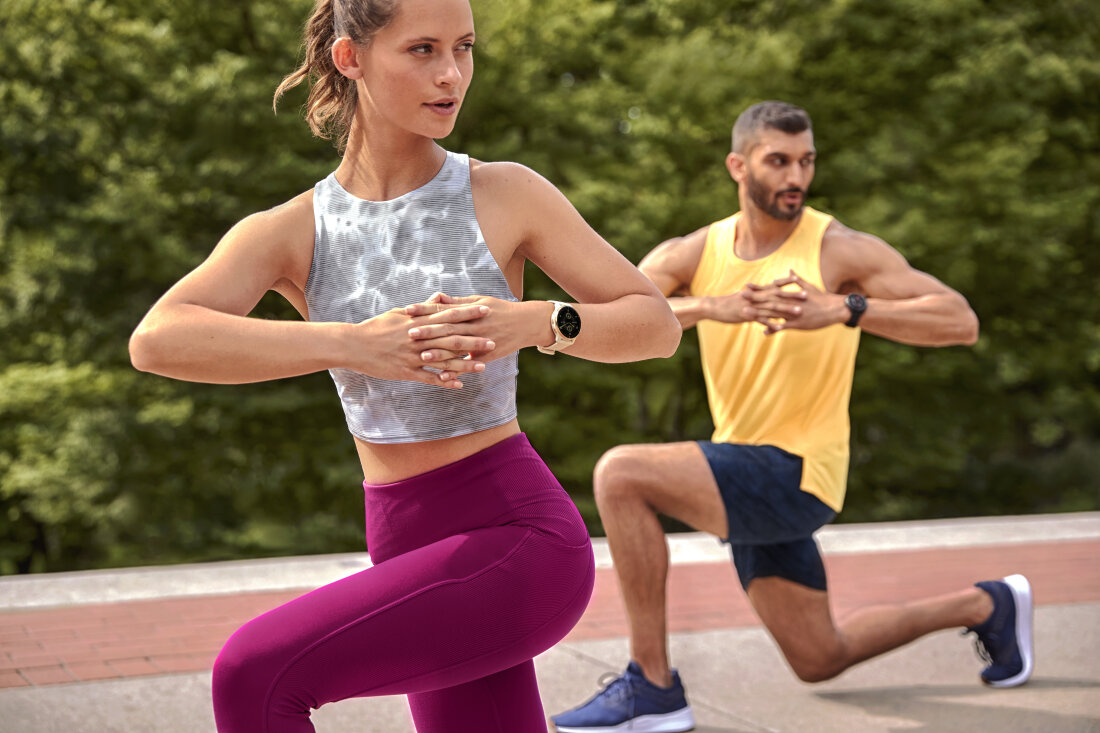
Sometimes we may not consciously notice these parameters in time ourselves, because the pace of life pushes us to keep going rather than stop. Subconscious worries, psychological stress and anxiety show up, for example, as a higher heart rate during sleep and lower heart rate variability. This is also used as a metric in many medical studies to get a more accurate picture of the nervous system's reactivity to stress. The heart rate data measured by a Garmin watch make it possible to assess whether there may be reason to take action (read: work out). In fact, to prevent low heart rate variability, it is recommended in certain cases to raise it slightly through training. Be sure to consult your doctor on this! An added effect is that our attention shifts away from whatever is making us anxious – physical exertion takes up too many resources to leave time for worrying. After that, changes begin in brain chemistry too, with more anti-anxiety chemicals being produced, such as serotonin, gamma-aminobutyric acid and endocannabinoids. In other words, the brain restores the resources designed to cope with acute and turbulent emotions and feelings.
Physical activity and sport also help people overcome anxiety sensitivity, which can be seen as a combination of cognitive, physical and emotional aspects. Some people catastrophise the inevitable physical symptoms and sensations that accompany anxiety, such as a pounding heart, shortness of breath or a ‘hollow’ feeling. When it comes to anxiety specifically, these are generally not harmful in any way – it is simply an overactivated nervous system. The inevitable result of training is that we activate these same sensations in ourselves, but we also get feedback that nothing bad happens – everything is safe. After a workout, you even feel good. Clinical studies show that experiencing such symptoms during exercise helps people cope better psychologically with, for example, a panic attack or acute anxiety attack, and with enough practice, not to pay excessive attention to them. A step towards overcoming and normalising anxiety has been taken! By the way, how many readers are afraid of public speaking precisely because their heart feels like it wants to jump out of their chest?! ☺
You can start with short aerobic workouts and move on to short, intense sessions. The more intense the load relative to our abilities that we achieve in training, the more feedback we give ourselves, and the brain learns that certain physiological symptoms are extremely uncomfortable, but that's where it ends – they pass.
Let it also be emphasised that when we talk purely about anxiety, packing your training gear and going to work out is a decisive behaviour. It is followed by a host of positive changes in body and mind! In the case of an anxiety disorder, however, physical activity is an essential part of treatment. To adequately assess your performance and training capacity and to get a more complete picture, consult other specialists in the field in addition to this post.

Author: Andero Teras