

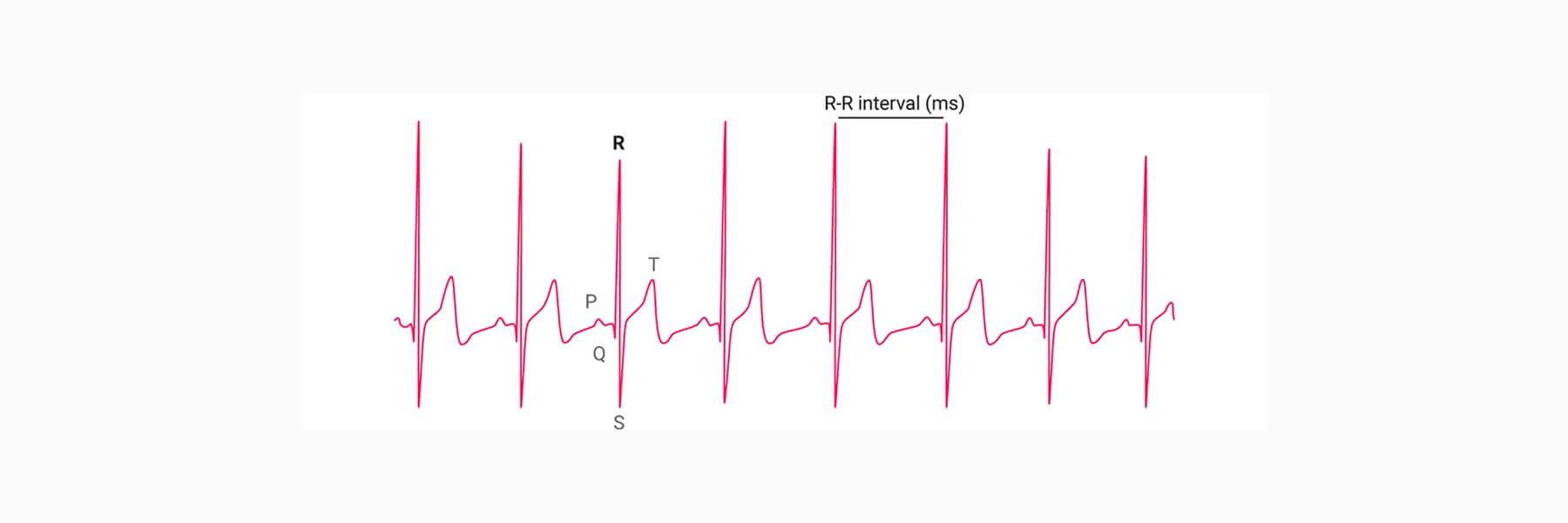
Your heart doesn't beat in a perfectly regular rhythm like a metronome, and in fact, fluctuations in heart rate are completely common and normal. To better understand how Garmin and Firstbeat use HRV to give you better insight into your body's condition, let's start with why HRV exists.
Your heart is controlled by the autonomic nervous system (ANS), an integral part of the nervous system. The ANS has two branches, called the sympathetic and parasympathetic branches. The sympathetic branch of the ANS is active when you're under some kind of stress. It's the part of your ANS that puts all systems on alert. The parasympathetic branch, by contrast, is the relaxed part that simply hums along when you're at ease. When the sympathetic branch is more active, your heart rate usually rises and beats in a more regular rhythm – meaning HRV decreases.
On the other hand, when the parasympathetic branch is more active, your heart rate drops and your heart beats as needed to meet your body's demands, but not on as strict a schedule as when the sympathetic branch is in charge. In other words, HRV increases. Because of these characteristics, HRV is an excellent indicator of the balance of activity between the two branches of the autonomic nervous system, and therefore an indirect measure of stress. Higher HRV means lower stress.
Many different statistical methods are used to characterise HRV, but the HRV stress test feature (formerly called stress score) makes life much easier by placing your stress on an easy-to-understand scale of 0–100. It's designed specifically as another tool for assessing how your body is doing and how it's coping with training stress and life stress.
Although HRV decreases when you start exercising and continues to drop as you push harder, it still provides useful information even when you're running fast. The lactate threshold feature available on some Garmin devices uses a Firstbeat feature that looks for the HRV inflection point, which corresponds precisely to your lactate threshold heart rate.