
Sleep tracking

16.05.2022
 Reading time: 6 minutes
Data from millions of Garmin Connect™ users hints at how age, biological sex and stress can affect the time we spend getting the sleep we need.
The claim that sleep is important isn't exactly breaking news. It is an essential bodily function linked to both mental and physical health. While one night of little or no sleep may not cost you much, ongoing sleep deprivation is linked to heart disease, stroke, poor mental health, high blood pressure, type 2 diabetes and even early death.
OK, sleep is important. Got it. But how does Garmin fit in? We were worried you'd never ask! Many Garmin smartwatches feature advanced sleep tracking, which[1] gives you a full report on exactly how well you slept — with an overview of your sleep/wake cycles and stages such as light, deep and REM sleep[2]. You even get a sleep score from 0 to 100, along with an overview of the factors that affected your score.
Being able to track your sleep habits over time makes a big difference, and knowing how your peers are doing is useful too. Of course, experts recommend that adults sleep 7-9 hours every night, but how many actually get that much? As it turns out, quite a lot of them. We looked at a sample of Garmin users who tracked their sleep with selected smartwatches and (as always) we're impressed by how well you prioritise your health and well-being. Keep reading to dive into the results of the latest Garmin data report, but first, here's an overview of our findings.
-
Most Garmin users get at least 7.5-8 hours of sleep every night.
-
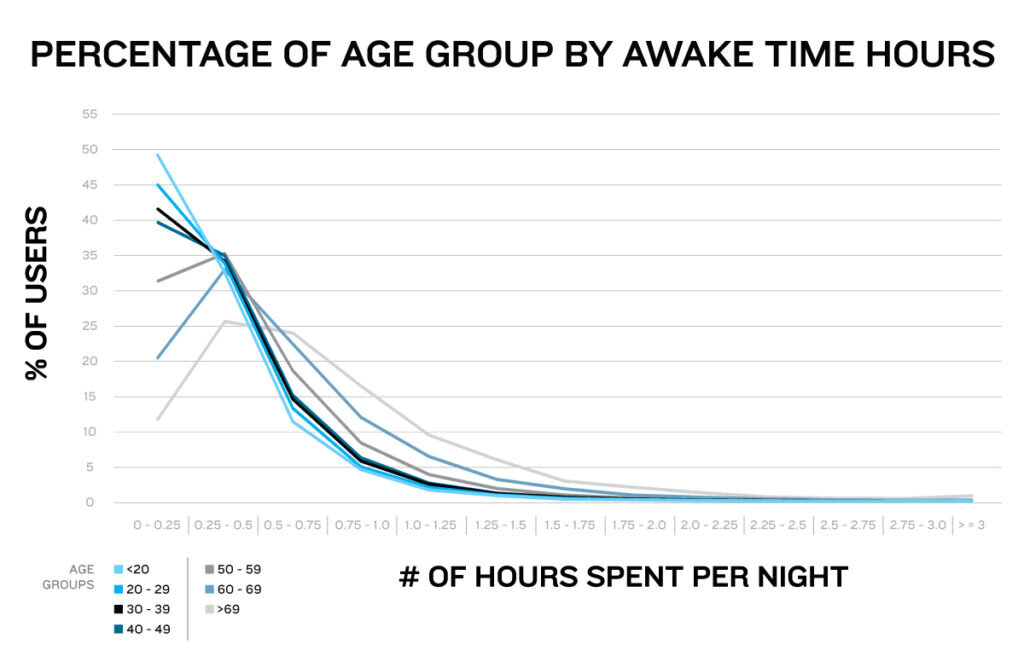
Older people spent more time in light sleep and are more likely to spend more time awake each night.
-
Women need more sleep than men. Garmin data shows that women typically spend 7 hours and 50 minutes asleep, while men spend 7 hours and 29 minutes.
-
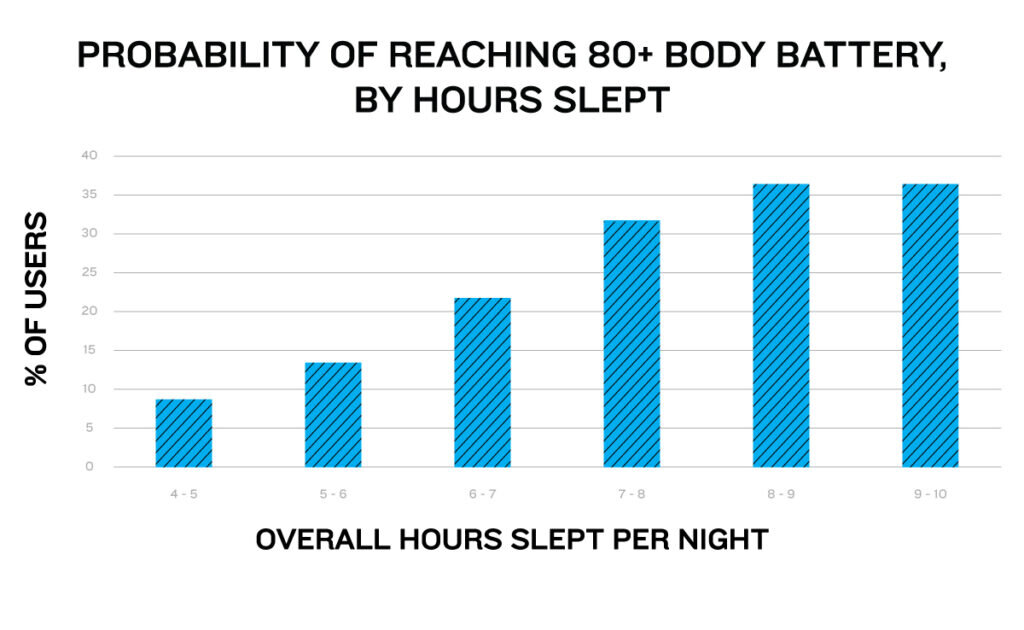
Those who sleep 7 hours or more are 50% more likely to reach a Body Battery™ of 80 or higher than those who don't.
-
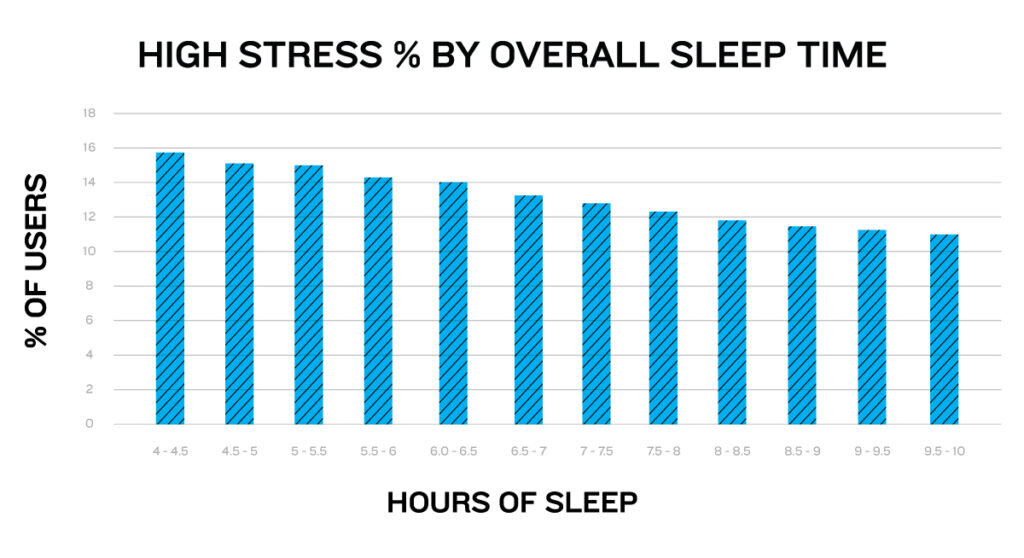
The more sleep someone gets, the less likely they are to spend time in a high-stress state.
How much sleep Garmin users get
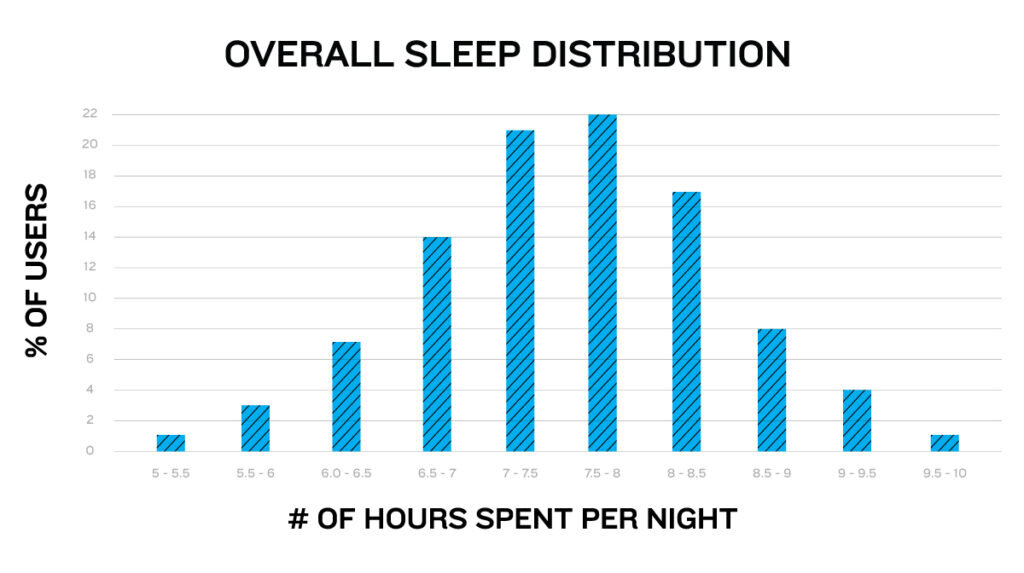
Give yourselves a big round of applause: most Garmin users get at least 7.5-8 hours of sleep every night. That falls within the range recommended by health experts and (hopefully) means you wake up rested every day and ready to take on your schedule. (If not, don't worry. Your Garmin watch can help you find out why, using metrics such as HRV stress and Body Battery.)
How age affects sleep
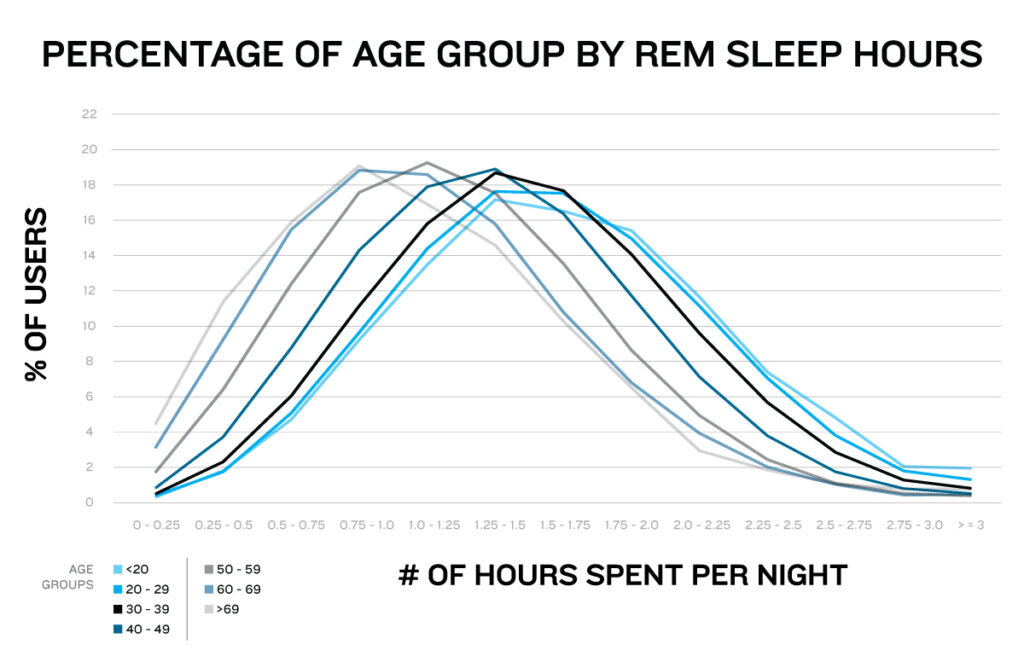
We know that age dictates how much sleep a person needs — if adults slept as much as newborns, we'd never get anything done. In adulthood, however, age still plays a role in sleep quality. The chart above shows that the older a person is, the less time they spend in REM sleep, which helps us remember and process information. Older people spend more time in light sleep and, as shown below, are likely to spend more time awake at night. Interestingly, those under 20 are most likely to spend 0-15 minutes awake each night, but as you get older, your chances of lying awake in bed at night increase. Oh, to be young again.
Did you know that women need more sleep than men? It's true. SleepFoundation.org points out several reasons, such as women's higher risk of insomnia, anxiety and depression. These also include fluctuating hormones caused by the menstrual cycle, pregnancy or menopause. (Psst - many Garmin smartwatches also offer on-device menstrual cycle and pregnancy tracking.)
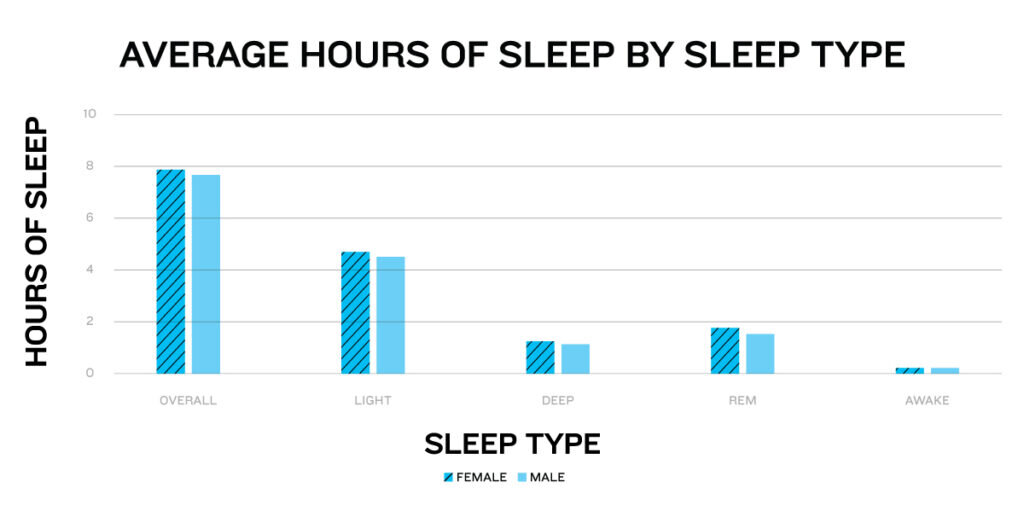
Luckily, Garmin data shows that women are getting that much-needed sleep. On average, women sleep 7 hours and 50 minutes each night, while men sleep 7 hours and 29 minutes. The sleep cycle breakdowns are as follows:
-
Women spend an average of 4 hours and 52 minutes in light sleep; the average for men is 4 hours and 35 minutes.
-
Women typically spend 1 hour and 11 minutes in deep sleep; the average for men is 1 hour and 7 minutes.
-
Women spend an average of 1 hour and 32 minutes in REM sleep; the average for men is 1 hour and 22 minutes.
-
Women spend an average of 23.46 minutes awake, while the average for men is 24.44 minutes.
How sleep affects Body Battery
Garmin Body Battery is a feature that helps you manage your energy reserves. At any moment, you can glance at your wrist to see how well the sympathetic (fight-or-flight) and parasympathetic (rest-and-digest) branches of your autonomic nervous system are working together. In other words, Body Battery shows you how well your body is juggling stress, recovery, sleep and physical activity and tells you on a scale of 0-100 how much gas you have left in the tank.
Sleep is the best way to recharge your Body Battery. The higher it is in the morning, the more likely you are to have enough energy to last the whole day. You'll understand how big the difference between 60 and 90 is when dinnertime approaches and your Body Battery has dropped by 50 during the day. If you started at 90, you're now at 40 and may still have the energy to cook dinner and spend quality time with your family. But if you started at 60, you're now at 10 and are probably looking for the nearest drive-through.
The data shows that those who sleep 7+ hours a night are 50% more likely to reach a Body Battery score of 80+ than those who don't.
How sleep affects stress
Similar to Body Battery and sleep score, your compatible Garmin smartwatch also assigns a number from 0-100 that shows your stress in real time [3]. Stress level is an indicator of your physiological state throughout the day. It is measured mainly using a combination of HR and HRV data recorded by the optical heart rate sensor on the back of your watch. When your stress level is 0-25, your body is in a resting state, shown in blue on the stress chart. A level of 26-50 indicates low stress (light orange), 51-75 is medium stress (dark orange) and 76-100 is considered high stress (dark orange).
Garmin data shows that the more a person sleeps, the less likely they are to spend time in a high-stress state. This means your body is better able to process stressful events and let them go. If you don't get enough sleep, that's not the case – you remain under high stress, which in turn wears down your mental and physical condition over time.
How can I improve my sleep?
If you've looked through all this data and found that your own sleep stats are lacking, there's no need to panic. There are several habits you can adopt to improve your sleep, and they're all much more likely to deliver better results than counting sheep. First of all, we recommend tracking it. If you're really interested in sleep, knowing what time you went to bed and what time you woke up probably isn't enough. The good news? That's what a Garmin smartwatch is for. Choose from our compatible watches to start analysing your sleep, including how much time you spend in different sleep stages and how your sleep score changes over the week[4]. This gives you a baseline to build on.
Once you know how you sleep, you're in a much better position to improve it. Garmin smartwatches offer tips for better sleep, and the Garmin Connect Insights feature[5] tells you about trends in your data, such as the days when you tend to sleep more or less. You can also apply advice from groups like the Sleep Foundation, which offer recommendations such as creating a comfortable sleep environment, building a bedtime routine and much more. The more intentionally you work on your sleep quality, the more likely you are to see positive results. Good luck and sweet dreams!
Not sure which Garmin watch is right for you? Visit our watch finder.
[1] When paired with a compatible smartphone
[2] See Garmin.com/ataccuracy
[3] See Garmin.com/ataccuracy
[4] See Garmin.com/ataccuracy
[5] Available to Garmin Connect customers who use activity tracking features.