
Rait Ratasepp: the key to success is tracking and analysing results every day

15.08.2022
 Reading time: 9 minutes
Garmin team member and ultra-athlete Rait Ratasepp is determined, full of willpower and has an analytical mind. In this blog post, Rait explains which numbers and metrics he tracks and how he uses these statistics to improve his athletic performance.
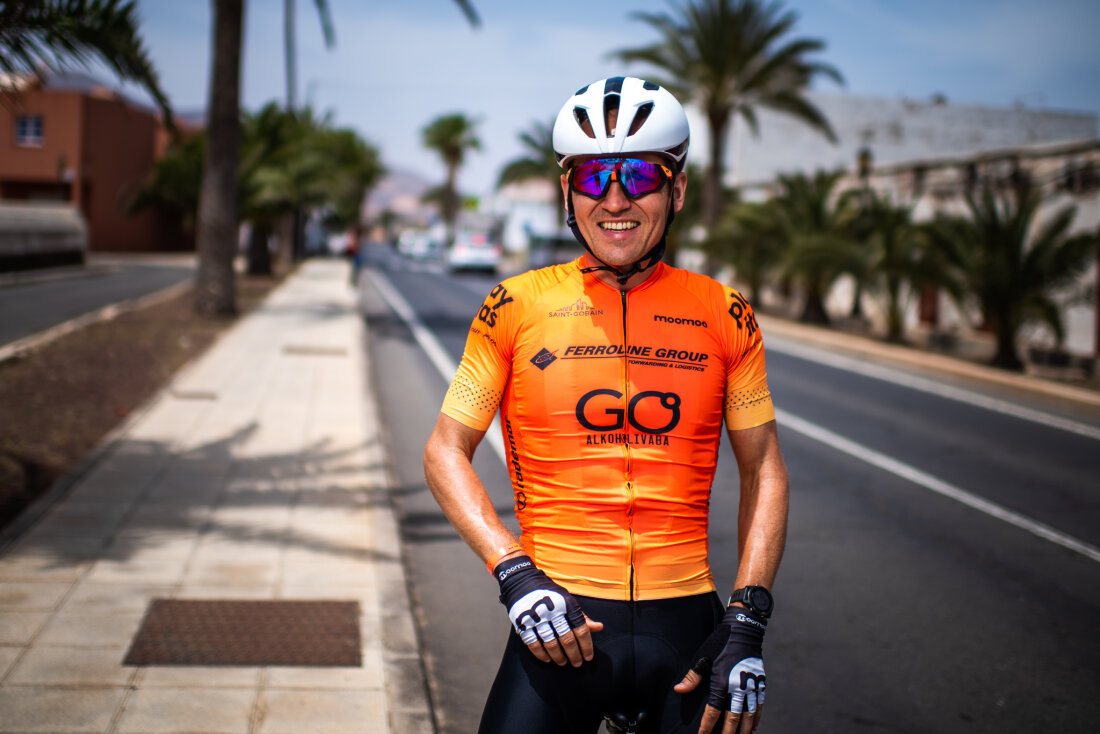
People mistakenly think that what I do in ultra sports is possible thanks to some genetic predisposition. That is definitely not the case. Only about ten years ago (i.e. at the age of 29), in terms of sporting results I was a completely ordinary so-called average Joe and back then, not even in my wildest dreams could I have imagined myself doing the things I do today. So what is different now? To put it simply, success has come from learning how my body works and from the ability to notice and listen to its signals. To do this, I started constantly tracking and analysing the characteristics related to both my training and my everyday life that affect them positively or negatively. Sports watches, activity trackers, power meters, smart scales and other tech devices, along with the online platforms that connect them (e.g. GarminConnect), have made collecting and analysing data easily accessible to all of us, but unfortunately we often fail to put the latter (i.e. the analysis part) to work for us. The value of data lies in placing it in context. The numbers from a single workout say nothing about our condition and progress until they can be compared with something.
Below is a selection of the numbers/metrics I track daily, why I track them, and how I analyse them through comparison. In doing so, I have learned a lot about my body and its so-called hidden abilities, and I keep discovering new aspects. I like to think that in order to be able to train without a watch, you first need to learn to train with one :). I consider the first major step in understanding how your body works to be the ability to complete a planned performance without a sports watch - in a race context, for example, this means knowing how to distribute your energy reserves so that you achieve your best result on the day and the result isn't affected by choosing the wrong pace.
Resting heart rate
I wear my Garmin watch 24/7, which gives me a good overview of my heart rate throughout the day. Above all, I'm interested in my heart rate at night, because it gives the earliest feedback on my body's stress level and possible overtraining. In the early morning hours my heart rate usually drops to 32-38 beats per minute. However, if the previous day included a very hard or long workout, or if I'm approaching the end of a training cycle, this shows up as a higher heart rate at night (e.g. 40-45). For a day or two this is normal and there's no reason to worry. You just need to make sure it returns to normal within a couple of days; otherwise, you need to adjust your training to avoid overtraining.
Sleep quality
Of course, quality sleep is absolutely essential for recovery, which is why I guard my sleep time very jealously. I only allow myself sleepless nights when a race or a self-organised challenge requires it. Every morning I've made it a habit to estimate my sleep score and quality based on how I feel, and then check on my Garmin watch whether my feeling was right. To my great surprise, the watch's assessment and how I feel usually match, which confirms for me that the formula developed for the watch works. During my big challenges I have always recorded information about my sleep and its duration, and I've learned from it, for example, that when sleep time per day is limited, as fatigue accumulates the body learns to recover with less sleep. While I normally sleep 8 hours a night or slightly more, during the 40x ultra triathlon, for example, I slept on average 6 hours and 45 minutes (see more here) per 24 hours, and that was completely enough. Not once did I feel sleepy during the challenge. During the 60x ultra triathlon my average sleep time was 5 hours 55 minutes, which was a bit little per 24 hours, but despite that my body coped nicely with so little sleep. In the 60x, everything went smoothly until day 14, when I was hit by a car while cycling. After that my sleep quality was disrupted for a long time, as my wounds didn't let me sleep properly and took a very long time to heal.
Body Battery
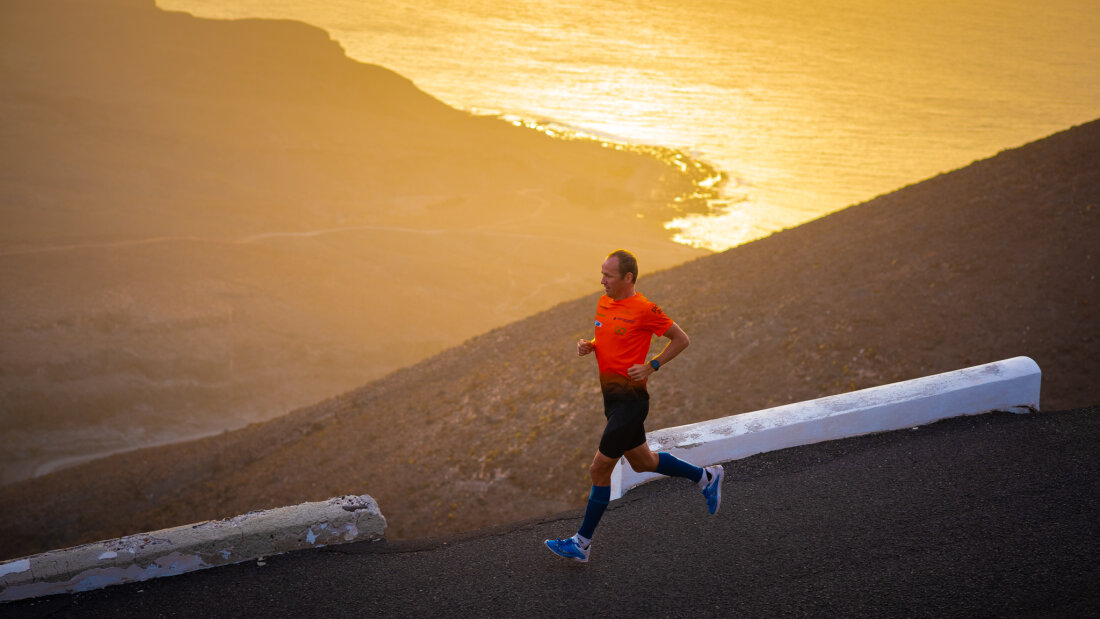
A metric related to the previous two that gives good feedback on recovery is the so-called body battery. This metric is calculated based on heart rate variability (HRV), stress score and user activity. During load weeks, when I train with progressively increasing loads, this metric usually doesn't recover to its maximum (100) by the next morning. That's how it should be, because otherwise the load week(s) training wouldn't serve its purpose. During an easier week, however, this metric generally reaches its maximum by the next morning, which means recovery is working as planned.
Body weight
For me, body weight has become much more than just a number. Body weight and its changes tell me how much stress training, racing and everyday worries cause me. It helps me assess the speed of my recovery process and when I can turn up the intensity or when I need to take my foot off the gas. During ultra challenges and races I weigh myself regularly whenever possible to assess how well I'm maintaining my fluid balance. Unusually large weight fluctuations during ultra challenges indicate improper preparation (read more about this here).
As a result of years of analysing my body weight and its changes, I've learned what my ideal weight for sport is. Although body weight is a very important factor in running and cycling, it doesn't always mean that the lower the weight, the better the result. If my weight drops below a certain point (my ideal weight), I lose speed and power. It's different for everyone and largely has to be figured out by trial and error.
For years I've been using the Garmin Index Smart Scale, which automatically sends my measurements to my GarminConnect account, where I can easily analyse the results (including body composition metrics). Although with each new model scales are becoming increasingly accurate at measuring body composition (body fat percentage, muscle and bone mass, body water %) as technology develops, what matters most to me is tracking changes in metrics measured with the same scale. This lets me go back in time, all the way to when I started using the scale, when comparing and analysing results.
Running and cycling VO2 max
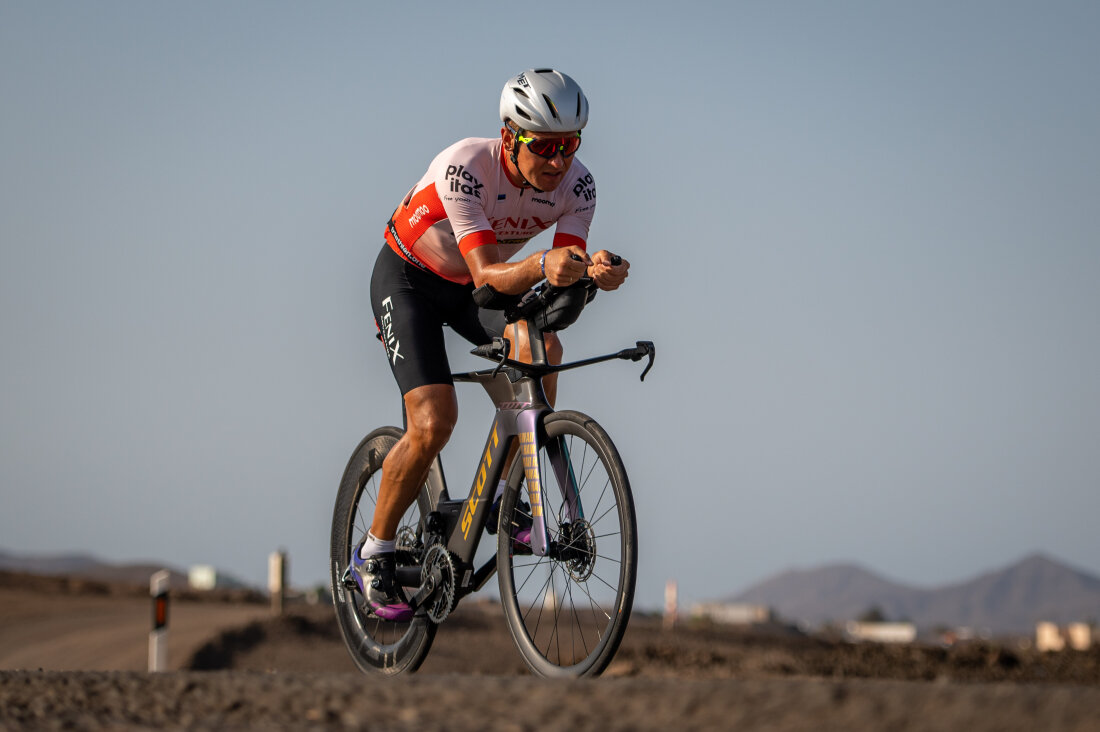
In the past I often assessed my running and cycling capacity with VO2 max tests in a lab (see e.g. here and here), but now I get this information from my Garmin devices. What's more, I've checked that the watch and lab results are fully consistent with each other. To determine your running VO2 max, a watch with the relevant feature is enough; for an accurate cycling figure you need a power meter (e.g. Vector 3 pedals). To determine key cycling metrics I use the Full Frontal test created by the Wahoo platform, which identifies the following key metrics: neuromuscular power (NM), anaerobic capacity (AC), maximal aerobic power (MAP) and functional threshold power (FTP). Wahoo is also nicely compatible with Garmin devices.
Original vs adjusted goal
The bigger the goals, the more time I give myself to achieve them. For sports-related goals, my usual timeframe has become about one year. Of course, a lot can happen in a year, and before setting out to chase a goal (e.g. in a race) it's worth checking whether it's still realistic. That's why, both during the training period and right before a race or self-organised ultra challenge, I compare my current condition in GarminConnect with previous training and pre-race conditions - e.g. for cycling, Full Frontal test results and average watts in key workouts; for running, average speeds and heart rate; and for swimming, the average time per 100m in key workouts. This gives a fairly accurate picture of my current state, and based on it I set realistic time goals that are achievable if race day goes well. It's not uncommon for me to have to adjust my original goals.
This approach has given me results incredibly close to my goals, considering the length of the races. For example, in the continuous double ultra triathlon (7.6 km swim + 360 km bike + 84.4 km run) I beat my goal by 1 minute and 46 seconds when I set a new world record with a time of 19:42:57. Or, for example, at the Tartu City Marathon in 2020, my goal was to set a new personal best and also break the 2 hours 30 minutes barrier. I got quite close - I ran a new personal best of 2:30:22 :).
Wrist-based heart rate
I've never been a big fan of heart rate straps. They always gave me a somewhat constricting feeling, so I only used one when necessary (e.g. for interval training), but not otherwise. Watches that measure heart rate from the wrist were a big relief for me and gave me the opportunity to analyse all my workouts more thoroughly. Originally, wrist-based heart rate wasn't possible in water, but some time ago this option was added for swimming too, which lets me analyse my swim workouts from this aspect as well going forward.
Heart rate changes in interval training
After interval and hill runs, I analyse them in GarminConnect and compare them with similar previous workouts: at what speed and to what level my heart rate rose by the end of a rep/hill climb, and how low it dropped by the start of the next rep. Based on this, I assess my recovery speed and when it's time to increase the intensity (either by increasing speed and/or reducing recovery time between reps). It's also a good indicator of possible overtraining, because if recovery is slower than usual and this lasts more than one day, there's reason to be careful and it's wise to ease off a little.
Heart rate changes on long runs
After longer runs, I analyse them and compare them with similar previous workouts to see whether, at what speed and when there is a clear upward shift in heart rate. This shows the point at which training-induced fatigue builds up in the body. The aim is to gradually push this point further and further through training, then increase the speed a little and make that speed easy for the body again. In other words, the body learns to work more economically. A good example of the body's adaptability and economy is the marathons run during the 60x ultra triathlon (see the table here). While the average time of the marathons in the first 20 days was 3:19:28 with an average heart rate of 121, the average for the next 20 days was more than six minutes faster at 3:13:23 (average heart rate 120), and on days 41-60 it took me on average 3:11:07 to run a marathon (average heart rate 121). What's more, during the last twenty days Fuerteventura was already hit by the extremely strong winds typical of November, which significantly affected running too. For example, on day 54 in very difficult wind conditions my marathon time was 3:14:40 (average heart rate 120), whereas two days earlier, on a day with milder wind, I ran 42.2 km in 3:07:41 (average heart rate 120). So I'm convinced that in milder weather the average running time for the last 20 days would have been even faster.
A similar trend in the body's adaptability and economy was confirmed by the 40x ultra triathlon (see the table here), where the average finishing time for the marathons in the first half was 3:31:08 and in the second half 3:20:42.
Photographer Jakob Meier