
Start Sleeping Better Today, Not Tonight

14.03.2024
 Reading time: 6 minutes
Good sleep makes everything better. Sleep is a vital time for recovery and rejuvenation. Only once you fall asleep does your body reach its peak recovery capacity.
Unless you've been living under a rock, this is old news. It's hard to miss the interviews and articles from sleep experts, influencers and healthcare professionals praising the benefits of good sleep.
Making good sleep a priority is one of the most rewarding decisions you can make for your health and personal wellbeing. It's a great multiplier that supports you even as you try to improve other aspects of your life.
The American Heart Association recently highlighted a year-long study that examined the link between personal sleep habits and adherence to a lifestyle-focused weight-loss programme. People with better sleep habits were more likely to attend programme meetings regularly, meet daily calorie intake goals and increase their daily physical activity.
Understanding your sleep patterns
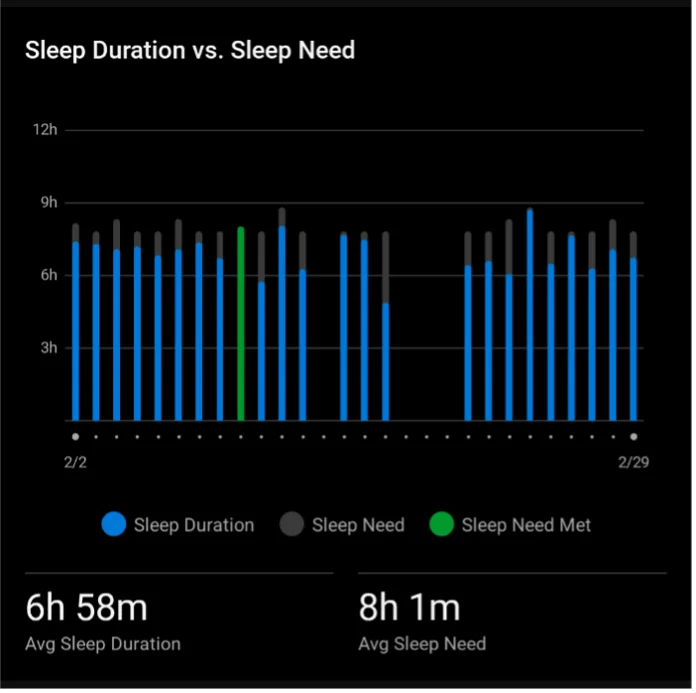
Tracking your sleep and building good sleep habits is easier than ever thanks to the data available on your Garmin watch. These insights go beyond simply noting when you went to bed and woke up. Garmin's sleep score , sleep coach , Body Battery ™ energy monitoring and overnight heart rate variability (HRV) interpret your sleep1 and show how sleep affects other aspects of your daily life.
Want to know how sleep affects your fitness and performance? Sleep score lays the foundation for training readiness, a popular feature of Garmin running and adventure watches designed to scientifically assess your readiness to benefit from intense training. And a particularly good sleep score can reduce your current recovery time estimate by hours, thanks to the restorative power of sleep. You may also notice recovery time recommendations increase after a particularly bad night. Despite the evidence in our morning reports, it's sometimes easy to dismiss the idea that our sleep habits are holding us back. Our lives are made up of routines. The choices we make in the moment always seem reasonable. Habits, both good and bad, form over time. Meaningful lifestyle changes can be challenging even when you're highly motivated.
 |
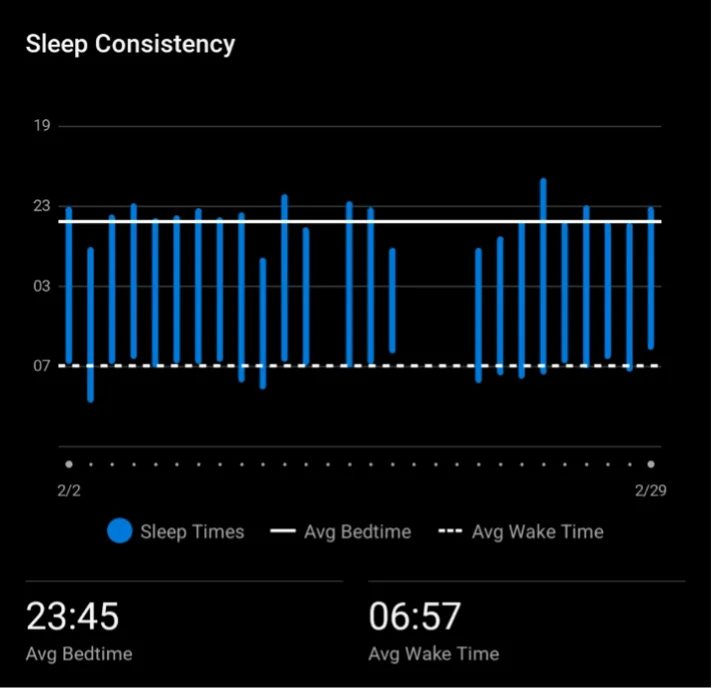 |
This is where a longer perspective can help. Looking back at your sleep habits over the last four weeks, or even the past year, can be an eye-opening experience. The kind of experience that changes things.
Lifestyle insights to improve your sleep quality
Once you've crawled into bed, there's not much you can do to improve your sleep. How well you sleep (or don't) is largely the result of steps taken during the day and even over longer periods. The following insights will help you better understand how lifestyle choices ultimately affect your sleep quality.
Wake up for better sleep
You may be surprised to learn that creating good sleep starts first thing in the morning. This is what experts call your circadian rhythm. Your circadian rhythm is your body's internal clock, following a roughly 24-hour cycle that affects virtually every cell in your body and brings physiological, mental and even behavioural changes.
Try to wake up at the same time every day. Open the curtains to let natural light into the room right after waking. A regular wake-up time and morning light exposure amplify the signal that your day has begun, reinforcing your circadian rhythm. For best results, also try heading outside in the morning for a brisk walk or light workout.
Eating for better sleep
From your body's point of view, your meal doesn't end when you finish the last bite and get up from the table. Digestion takes time, and this process affects your body. The work of digestion can affect your sleep quality. Ideally, your last heavy meal should be at least 2-3 hours before bedtime. Spicy and acidic foods can be especially challenging for good sleep due to the increased likelihood of acid reflux, heartburn and indigestion.
If you're hungry before bed, try to stick to yoghurt, fruit, nuts and light snacks. Oatmeal is another popular choice that is easy on your stomach and contains magnesium and melatonin, two ingredients often found in sleep supplements.
Drinking for better sleep
Proper hydration is a cornerstone of good health. Should you drink water before bed? Results vary. Some find it helps them sleep, while for others it simply means needing to visit the toilet in the middle of the night.
Drinks containing caffeine and alcohol can have a profound effect on sleep, each in a different way. Caffeine is a fast-acting stimulant that lifts your mood and makes it harder to fall asleep. With a half-life of 3–5 hours, caffeine's effect on your central nervous system takes a while to wear off. If you have trouble falling asleep, you might try limiting coffee, tea and caffeinated soda to the morning hours.
Alcohol has a much more complicated relationship with sleep. To begin with, alcohol may help you fall asleep faster, especially if you don't drink regularly. The problem is that even moderate amounts of alcohol can disrupt your sleep cycles and ruin sleep quality. You'll likely also notice a lack of REM sleep on nights when you drink. And the effects of alcohol are especially easy to spot in your sleep score, Body Battery, overnight HRV and training readiness. Seeing the impact of alcohol this way can be a real eye-opener.
Train for better sleep
Regular exercise can improve both sleep quality and duration. Well-timed moderate to vigorous exercise lasting at least 30 minutes during the day can help you fall asleep faster. However, it's generally a good idea to avoid hard training before bed, as your body doesn't return to normal the moment you press stop on your activity. Elevated post-workout energy levels don't just challenge your ability to fall asleep. They can also raise stress levels during sleep and reduce sleep quality for many hours after you manage to drift off.
If you find you need to schedule a late-evening workout, choose more relaxing activities. Consider a yoga or Pilates session to do something positive for your health without putting good sleep at risk. And while breathwork may not qualify as a workout, breathing activities send a powerful message through your nervous system that it's time to relax, making it easier to fall asleep.
Finish strong
Just like how you start your day, your evening routine plays an important role in preparing your body and mind for quality sleep. Remember that a consistent schedule and light exposure help tune your body's internal clock and keep your circadian rhythm steady. These details, together with an understanding of how eating, drinking and exercise affect sleep quality, put you on the path to turning your sleep habits into a personal advantage.
Try to go to bed at roughly the same time every night. And make sure your sleep schedule gives you enough sleep time, typically 7–9 hours each night. Give yourself time to unwind before bed and avoid bright light.
Blue light and white light containing blue light can be especially disruptive when you're trying to maintain the benefits of a strong circadian rhythm. Many phones, tablets and other screens have a setting that reduces blue light emission if you need to use your electronic devices before bed.
Still having trouble sleeping?
And finally, if you've tried these tips and still struggle to fall asleep, stay asleep or wake up refreshed, don't be afraid to seek help from a healthcare professional. They can assess underlying conditions such as sleep apnoea or insomnia and recommend suitable treatments to improve your sleep quality and overall wellbeing.
1 See Garmin.com/ataccuracy