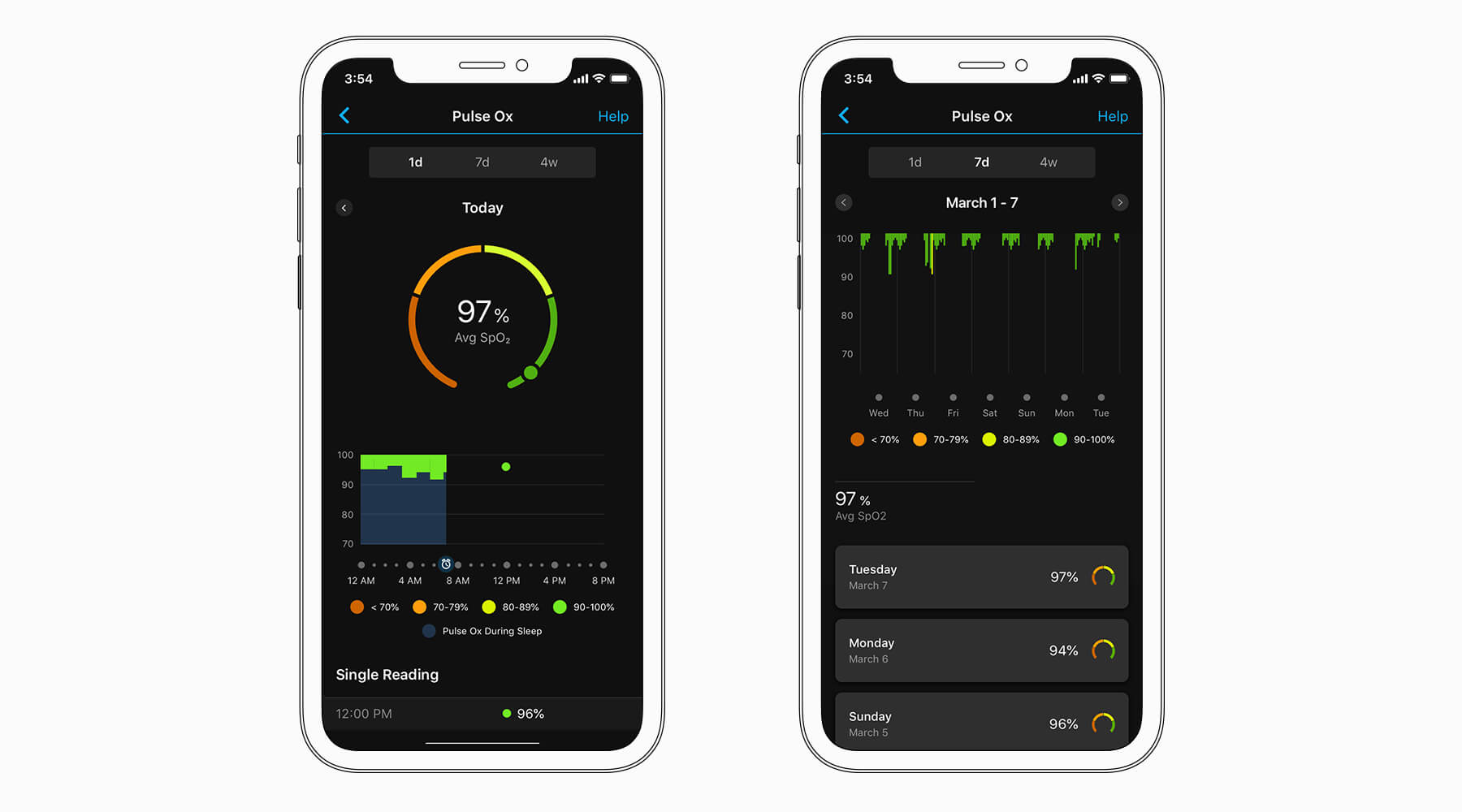

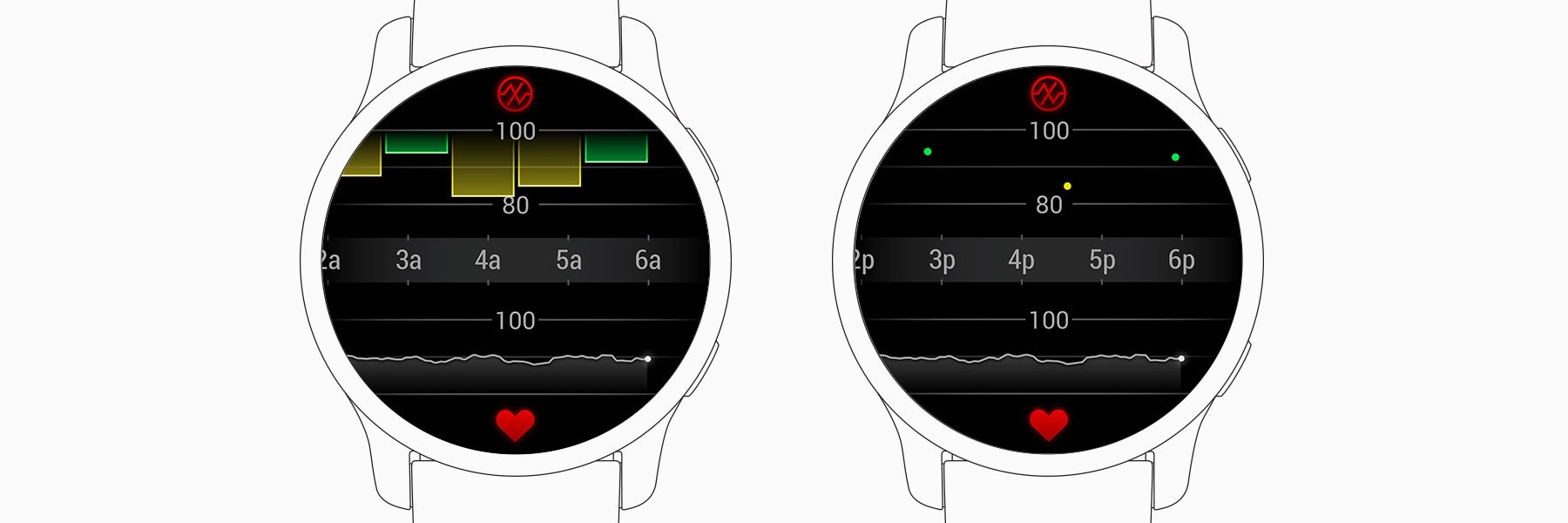
All the different cells in your body need oxygen to function properly. Your circulatory system, including your heart, lungs and blood, all work together to bring oxygen from the outside environment to your cells.
Oxygen is taken from the air that fills your lungs when you breathe in. It is mixed into your blood and pushed through your body with every heartbeat. A pulse oximeter measures how much oxygen (compared to its maximum capacity) is in your blood as it circulates through your body.
If you imagine that blood is like a train and oxygen is like the passengers on that train, a pulse oximeter tells you how many people are on the train compared to the train's maximum capacity. If every seat is taken, the train is running at 100% capacity.
Compatible Garmin wearables use a combination of red and infrared light and sensors on the back of the device to estimate your blood oxygen level (peripheral oxygen saturation, SpO2%). In general, this reading should be 95% or higher in most situations, but it can be affected by altitude, activity and a person's own health. A reading below 90% may be considered low, based on Mayo Clinic data.
This device is not intended for medical use, and any questions about your pulse oximetry readings should be answered by your doctor or a qualified healthcare professional. Pulse oximetry on Garmin devices is not available in all countries.