
Stay connected on the go, without your phone
Smartwatches with inReach® technology1 bring extra peace of mind to your adventures. An active inReach plan lets you stay in touch with friends and family via LTE or satellite connection.
Satellite feature requirements
When you go beyond LTE coverage, inReach technology lets you send messages and receive location information without a phone connection once a satellite connection has been established.
Connecting to satellites
Unlike Garmin handheld devices, which use inReach technology to connect to a global satellite network, Garmin smartwatches use geostationary satellites that stay in a fixed position in the sky. To establish a satellite connection, you need to stop moving and follow the instructions shown on the watch screen. The connection process may vary depending on the watch model. For example, some models may guide you to point the watch face towards the satellite, while others may instruct you to take the watch off your wrist and point it towards the satellite for the best connection.
Because the satellite is in a fixed position, if you cannot connect due to obstructions such as trees, terrain or buildings, you will need to move to a new location with a clear view of the satellite. Once you have followed the on-screen instructions and the device is positioned correctly, connecting may take 30 seconds or more with good signal strength. After connecting to the satellite, messages are usually sent in less than 10 seconds. For best results, follow the positioning instructions shown on your watch while sending a message.
Once you have connected and sent your first message, the watch downloads any queued messages that people have sent you. It then returns you to the Garmin Messenger™ app interface on the device, where you can send further messages. Your smartwatch keeps the connection on for about a minute and then turns it off to save power.
Satellite coverage
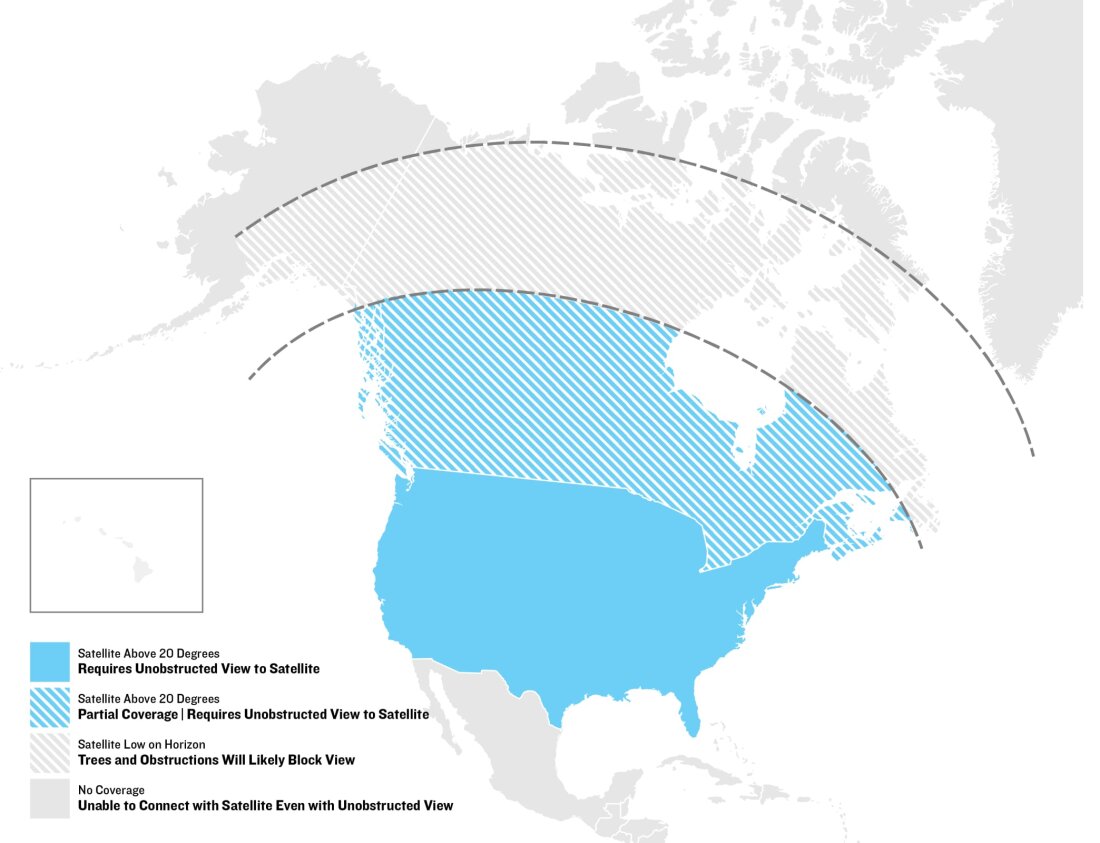
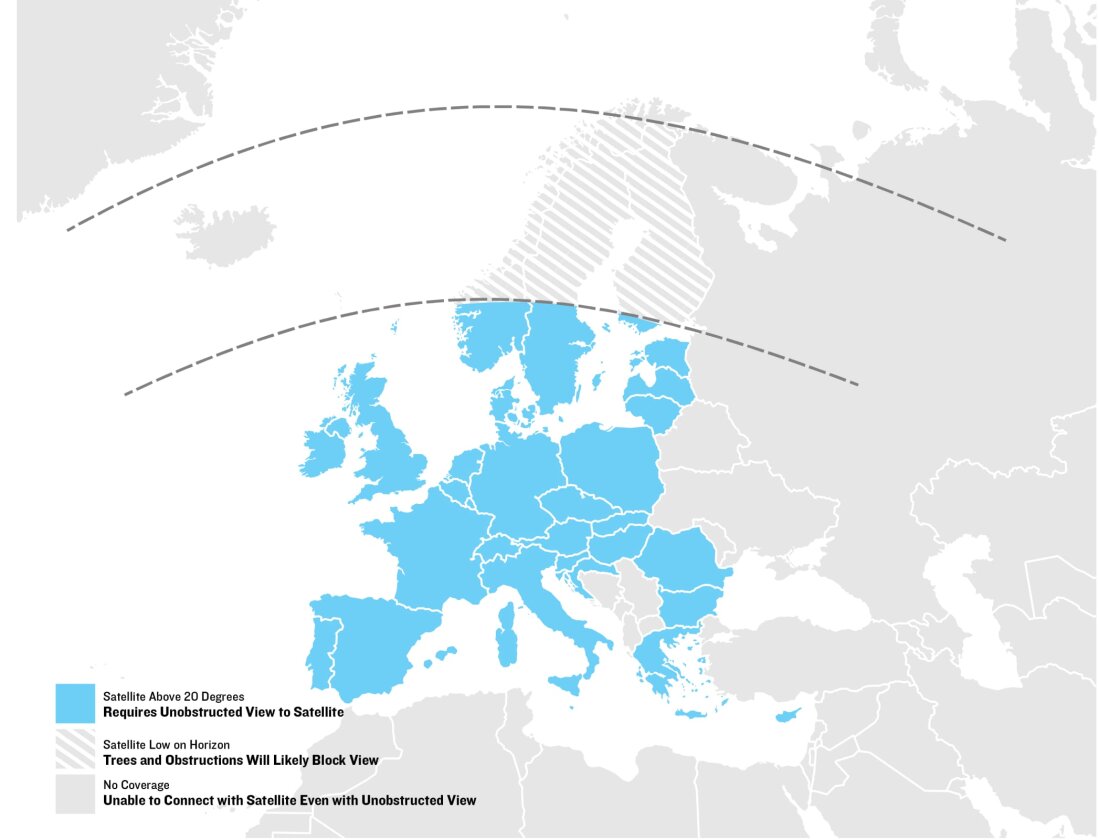
A smartwatch with inReach technology offers coverage only in the contiguous United States, parts of Canada and most of Europe. Geostationary satellites appear lower above the horizon the further north you go. The lower the satellite is in the sky, the more easily trees and other obstructions can block the signal. See the map on the coverage page for areas where the satellite is 20 degrees above the horizon. The further north you go, the lower the satellite is above the horizon. Connecting may be possible if you have a clear view in the direction of the satellite (generally south and west), for example in a large field, on the open sea or on a mountaintop.
Garmin Messenger™ app
With the Messenger calling app on a smartwatch with LTE connectivity and inReach technology, you can call any other inReach-enabled device or anyone who has downloaded and set up the Garmin Messenger app on their compatible smartphone. To use the smartwatch messaging feature, you must set up the Garmin Messenger app on your compatible smartphone. Garmin Messenger offers an easy way to stay in touch with friends and family. Leave your phone at home during your activity and use inReach technology1 for voice calls and LiveTrack™ location sharing when you have an LTE network connection. Or access two-way messaging and interactive SOS messaging via either LTE connection or satellite link.
LTE feature requirements
Smartwatches with inReach technology use LTE-M mobile networks, which are designed to operate with lower power consumption than traditional mobile phones. They can offer better coverage while maximising the watch battery life. Most towers that support regular mobile connectivity on compatible networks also support LTE-M, and coverage is expanding worldwide. As with traditional LTE or 5G technologies, LTE-M coverage can be affected by large buildings, especially those made of concrete or steel.
LTE-M coverage provides a data connection but not a phone number, and it cannot be used to make regular calls or send SMS messages. In addition to the data connection, Garmin provides services including calls, messaging and LiveTrack location sharing.
LTE coverage
Your smartwatch uses the LTE-M networks of multiple roaming providers around the world. This means network availability and performance are not under Garmin's control. Features that depend on mobile connectivity and battery life may vary depending on coverage and signal quality. A full list of countries where smartwatches with inReach technology currently have LTE coverage can be found below.
LiveTrack location sharing
Smartwatches with inReach technology seamlessly use an LTE connection (when available) to keep your LiveTrack session going – maintaining the connection even if the link between the device and your phone is lost during the activity. When starting a LiveTrack session, you can choose friends and family members to be notified so they can keep an eye on your route. It also lets these contacts know they can use the Garmin Messenger app if they need to reach you during your trip. Garmin smartwatches do not support LiveTrack location sharing via satellite.
Garmin LTE coverage includes the following countries
- Australia
- Austria
- Belgium
- Canada
- Czech Republic
- Denmark
- Estonia
- Finland
- France
- Germany
- Guernsey
- Iceland
- Ireland
- Israel
- Japan
- Latvia
- Liechtenstein
- Lithuania
- Luxembourg
- Mexico
- Netherlands
- New Zealand
- Norway
- Poland
- Portugal
- Puerto Rico
- Romania
- Singapore
- Slovenia
- South Korea
- Spain
- Svalbard and Jan Mayen
- Sweden
- Switzerland
- Taiwan
- Thailand
- United Kingdom
- US Virgin Islands
- USA
Garmin inReach satellite coverage
Smartwatches with inReach® technology1 use a satellite connection for off-grid connectivity. Because these satellites are in geostationary orbit, your watch must be able to "see" the satellite above the horizon to receive a signal. Trees, terrain or buildings can block the signal, so you will need to move to an area with a clear view of the sky. In regions of the globe above 65 degrees north latitude, the satellite network orbits below the horizon and therefore cannot provide a clear connection.
| Austria | |
| Belgium | |
| Bulgaria | |
| Canada | Partial coverage; see the map for more information |
| Croatia | |
| Cyprus | |
| Czech Republic | |
| Denmark | |
| Estonia | |
| Finland | Partial coverage; see the map for more information |
| France | |
| Germany | |
| Greece | |
| Hungary | |
| Ireland | |
| Italy | |
| Latvia | |
| Liechtenstein | |
| Lithuania | |
| Luxembourg | |
| Malta | |
| Netherlands | |
| Norway | Partial coverage; see the map for more information |
| Poland | |
| Portugal | |
| Romania | |
| Slovakia | |
| Slovenia | |
| Spain | |
| Sweden | Partial coverage; see the map for more information |
| Switzerland | |
| United Kingdom | |
| USA | Excludes Alaska and Hawaii |
1 Some jurisdictions regulate or prohibit the use of satellite communication devices; it is the user's responsibility to know and follow all applicable laws.