
Stabilised pico-ionic magnesium – a solution to magnesium deficiency

01.11.2024
 Reading time: 10 minutes
Today we're diving into something extremely important for your well-being – stabilised pico-ionic magnesium. You may wonder what's so special about this mineral, but let's talk about why stabilised pico-ionic magnesium is a true hero for your health.
What is stabilised pico-ionic magnesium?
First, let's explain the name. “Stabilised pico-ionic” means that the magnesium particles are ultra-small and easily absorbed. This form of magnesium can easily enter your cells, making it incredibly effective at doing its job.

Why do we need magnesium?
Magnesium is involved in more than 300 biochemical reactions in the human body. From energy production to muscle function, nerve impulse transmission and DNA synthesis, this mineral is vital for your body to function. Think of magnesium as the oil that keeps your car's engine running smoothly. Without it, things go wrong.
Why doesn't our food contain enough magnesium anymore?
Soil depletion
Intensive farming and the use of chemicals have reduced the magnesium content of the soil. Our soil has become less nutrient-rich, which means our food also contains less magnesium.
Processed foods
Modern food production processes often remove magnesium from foods. Refining white flour and sugar removes much of their original magnesium content. For example, a slice of wholegrain bread contains 24 mg of magnesium, while a slice of white bread contains only 6 mg.
Changed eating habits
Many of us eat fewer magnesium-rich foods (leafy vegetables, nuts and seeds) than processed and fast foods, which are low in nutrients.
Low magnesium content in drinking water
Modern water treatment processes can remove magnesium from the water we drink. This means that even our drinking water may no longer be a good source of magnesium.
Acid rain
Acid rain caused by excessive air pollution in industrial areas and cities can change soil chemistry, making it too acidic and reducing its magnesium content. This causes calcium and magnesium to leach out, leading to depletion of these minerals and reducing plants' ability to survive.
Industrial mineral fertilisers
Since the 1930s, the preferred fertiliser has been high-potassium potash, which plants absorb more easily than magnesium and calcium. However, excess potassium in fertiliser can hinder the absorption of magnesium by plants.
Processed and cooked foods
Processing and cooking significantly reduce the magnesium content of food. For example, boiling vegetables can cause magnesium to leach into the cooking water.
Plant preferences
Plants grown in fertilised soil may prefer potassium over magnesium and calcium, which reduces the content of these minerals in the plants.
Genetically modified seeds and herbicides
Genetically modified seeds and herbicides such as Roundup bind magnesium, making it unavailable to plants and further reducing the magnesium content of the soil.
Symptoms of magnesium deficiency
Magnesium deficiency can show up in many different ways. Here are 68 symptoms of magnesium deficiency and their causes:
- Acid reflux. Magnesium helps relax the lower oesophageal sphincter, preventing acid reflux and heartburn.
- Adrenal fatigue. Magnesium is important for normal adrenal function, reducing the production of stress hormones and supporting energy balance.
- Alzheimer's disease. Magnesium helps prevent calcium build-up in the brain, which can lead to neurodegenerative diseases such as Alzheimer's disease.
- Angina. Magnesium relaxes the blood vessels of the heart, reducing the pain and discomfort associated with angina.
- Arthritis. Magnesium helps reduce joint inflammation and calcium build-up in the joints, which can cause arthritis.
- Asthma. Magnesium relaxes the bronchi, reducing the frequency and intensity of asthma attacks.
- Anxiety and panic attacks. Magnesium calms the nervous system and helps lower stress hormone levels, which can cause anxiety and panic attacks.
- Atherosclerosis. Magnesium helps keep blood vessels elastic, reducing the risk of atherosclerosis.
- Atrial fibrillation. Magnesium regulates the heart's electrical activity, reducing the risk of atrial fibrillation.
- Blood clots. Magnesium helps balance the blood clotting process, preventing blood clots.
- Crohn's disease and colitis. Magnesium helps relax the intestinal muscles and reduce inflammation associated with Crohn's disease and colitis.
- Teeth grinding. Magnesium helps relax the jaw muscles, preventing teeth grinding, especially at night.
- Calcification. Magnesium helps prevent calcium build-up in soft tissues, reducing the risk of calcification.
- Cerebral palsy. Magnesium improves muscle relaxation and reduces spasticity in cerebral palsy.
- High cholesterol. Magnesium regulates cholesterol synthesis, naturally lowering blood cholesterol levels.
- Chronic fatigue syndrome. Magnesium is needed for energy production in cells, helping to combat chronic fatigue.
- Chronic neck and upper back pain. Magnesium helps relax muscles and reduce inflammation, which can cause neck and upper back pain.
- Cystic fibrosis. Magnesium may help improve respiratory function and reduce mucus thickening in cystic fibrosis.
- Cystitis. Magnesium helps relax bladder spasms, reducing the discomfort and frequent urination associated with cystitis.
- Dementia. Magnesium protects brain cells from oxidative stress, which may help prevent dementia.
- Depression. Magnesium is involved in serotonin production, which helps improve mood and reduce symptoms of depression.
- Detoxification. Magnesium helps the body eliminate toxins and heavy metals, improving overall health.
- Diabetes. Magnesium helps regulate insulin production and blood sugar levels, reducing the risk of diabetes.
- Menstrual cramps. Magnesium helps relax the uterine muscles, reducing the intensity of menstrual cramps.
- Exhaustion. Magnesium is important for maintaining energy levels, helping to combat exhaustion and fatigue.
- Female infertility. Magnesium helps regulate hormonal balance, which is important for maintaining fertility.
- Muscular rheumatism. Magnesium helps reduce muscle inflammation and stiffness associated with muscular rheumatism.
- Fibromyalgia. Magnesium helps relax muscles and reduce pain associated with fibromyalgia.
- Intestinal spasms. Magnesium relaxes the smooth muscles of the intestines, reducing spasms and discomfort.
- Headaches. Magnesium helps relax blood vessels and reduce muscle tension, which can cause headaches.
- Heart disease. Magnesium supports heart health by regulating heart rhythm and reducing inflammation.
- Hyperemotionality. Magnesium helps regulate the nervous system, reducing excessive emotionality and mood swings.
- High blood pressure. Magnesium helps relax the smooth muscles of blood vessels, lowering blood pressure.
- Hypoglycaemia. Magnesium helps maintain stable blood sugar levels, reducing episodes of hypoglycaemia.
- Infections. Magnesium strengthens the immune system, helping the body fight infections more effectively.
- Inflammation. Magnesium helps reduce the production of inflammatory compounds, reducing inflammatory processes in the body.
- Insomnia. Magnesium helps relax the nervous system and muscles, promoting better sleep.
- Irritable bowel syndrome. Magnesium relaxes the intestinal muscles, reducing symptoms associated with irritable bowel syndrome.
- Jaw spasms. Magnesium helps reduce muscle cramps and spasms that can cause jaw problems.
- Kidney disease. Magnesium helps regulate calcium and phosphorus levels, reducing the risk of kidney disease.
- Kidney stones. Magnesium helps prevent the formation of calcium oxalate crystals, which can form kidney stones.
- Lower back pain. Magnesium helps relax the lower back muscles and reduce inflammation, which can cause lower back pain.
- Male infertility. Magnesium supports sperm vitality and motility, improving male fertility.
- Migraine. Magnesium may reduce the frequency and intensity of migraines by relaxing blood vessels and reducing inflammation.
- Muscle cramps. Magnesium relaxes muscles and reduces spasms that can cause muscle cramps.
- Muscle weakness. Magnesium is needed for muscle contraction and relaxation, so it helps prevent muscle weakness.
- Musculoskeletal disorders. Magnesium supports muscle and bone health, reducing the risk of musculoskeletal disorders.
- Neurological symptoms. Magnesium helps regulate nervous system function, reducing neurological symptoms.
- Osteoporosis. Magnesium supports bone health by improving calcium absorption and reducing the risk of osteoporosis.
- Parkinson's disease. Magnesium helps reduce symptoms of neurodegenerative diseases such as Parkinson's disease.
- Tingling, burning pain. Magnesium helps calm the nervous system, reducing unpleasant sensations such as tingling or burning pain.
- PMS. Magnesium helps regulate hormonal balance, reducing PMS symptoms.
- Premature birth. Magnesium helps relax the uterine muscles, reducing the risk of premature birth.
- Pre-eclampsia and eclampsia. Magnesium helps lower blood pressure and reduce the risk of seizures associated with pre-eclampsia.
- Raynaud’s syndrome. Magnesium helps relax blood vessels, improving circulation and reducing symptoms associated with Raynaud’s syndrome.
- Restless legs. Magnesium helps relax muscles and nerves, reducing symptoms of restless legs syndrome.
- Seizures. Magnesium regulates nervous system activity, reducing the risk of seizures.
- Tension headaches. Magnesium helps relax tense muscles and reduce the occurrence of tension headaches.
- Skin sensitivity sensations. Magnesium helps calm the nerves and reduce symptoms related to skin sensitivity, such as tingling and itching.
- Sports injuries. Magnesium helps muscles and joints recover after sports injuries, reducing inflammation and pain.
- Recovery from sports injuries. Magnesium speeds up tissue healing and reduces inflammation, helping you recover faster.
- Stroke. Magnesium helps regulate blood pressure and reduce the risk of blood clots, which can cause a stroke.
- Sudden infant death syndrome. Magnesium plays an important role in nervous system development and respiratory health, which may help prevent sudden infant death syndrome.
- Tongue biting. Magnesium helps relax muscles and reduce spasms that can cause involuntary tongue biting.
- Vertigo. Magnesium helps regulate nervous system function, reducing symptoms of vertigo.
- Temporomandibular joint disorders. Magnesium helps relax the jaw muscles and reduce inflammation associated with temporomandibular joint problems.
- Tooth decay. Magnesium helps keep tooth enamel strong, reducing the risk of tooth decay.
- Trigeminal neuralgia. Magnesium helps calm the nerves and reduce pain associated with trigeminal neuralgia.
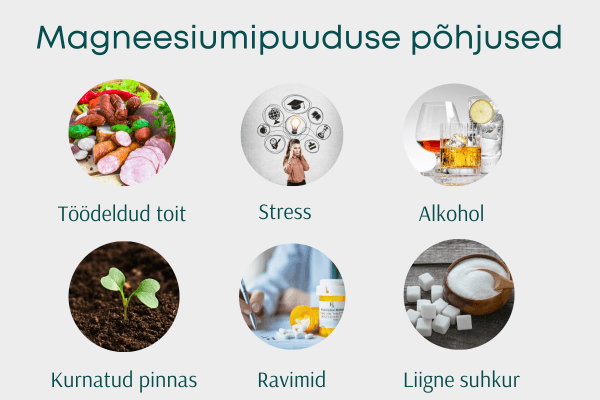
What depletes magnesium in the body?
Besides our food not containing enough magnesium, there are several factors that deplete magnesium in the body. Here are some of the most important:
- Intense physical activity. During sport and training, we lose a lot of magnesium through sweat.
- Alcohol consumption. Alcohol increases urine output, causing magnesium loss.
- Antacids. Antacids neutralise stomach acid, which can reduce magnesium absorption.
- Coffee and other caffeinated drinks. Caffeine acts as a diuretic and increases magnesium loss through urine.
- Medications. Many medications, especially those containing fluoride, bind magnesium and make it unavailable to the body.
- Processed foods. Processing and cooking significantly reduce the magnesium content of food.
- Herbicides and pesticides. These chemicals bind magnesium and make it unavailable to plants.
- Intestinal (gut-related) diseases. Conditions such as irritable bowel syndrome, leaky gut syndrome, gluten and casein sensitivity, fungal infections and parasites can interfere with magnesium absorption.
- Stress. Physical, mental and emotional stress increase magnesium loss through urine.
- Low stomach acid. Reduced stomach acid production due to stress can reduce magnesium absorption.
- Tannins in green and black tea. Tannins can bind minerals, including magnesium, and reduce their absorption.
- Water treatment. Water treatment processes, especially softening, can remove magnesium.
What makes stabilised pico-ionic ReMag special?
You may be wondering why you should choose stabilised pico-ionic ReMag over other magnesium supplements. Here are the reasons that make ReMag a special and reliable choice:
- Absorption efficiency. Stabilised pico-ionic ReMag is designed so that its magnesium particles are ultra-small, allowing them to be easily absorbed directly into cells. This ensures fast and effective absorption compared to other forms of magnesium, which may be poorly absorbed in the digestive tract.
- Technology. ReMag uses a unique technology that ensures the magnesium is in a stabilised pico-ionic form. This means the magnesium particles are smaller than cell membranes, allowing them to easily enter cells and act directly where they are needed most.
- Pure and safe. ReMag is pure and safe, with no harmful additives. The product was developed to deliver maximum health benefits without adding unnecessary ingredients that could cause side effects.
- Reliable results. User feedback and clinical studies have shown that ReMag effectively helps relieve symptoms caused by magnesium deficiency, such as muscle cramps, fatigue and anxiety. Many users have experienced significant improvement in their overall health and well-being.
- Easy to use. ReMag is easy to add to your daily routine. It can be taken dissolved in water or other drinks, making it a simple and convenient way to get the magnesium you need.
How to get more magnesium
Now that you know how important magnesium is, let's talk about how to get more of it. Although you can get magnesium from foods such as leafy vegetables, nuts, seeds and wholegrain products, it may not always be enough. This is where stabilised pico-ionic magnesium supplements come in.
Choosing the right supplement
Among the many magnesium supplements, it's worth choosing one that is easily absorbed. Stabilised pico-ionic magnesium is an excellent choice because its tiny ionic particles are quickly absorbed into cells, ensuring maximum benefit.
User experiences
Experiences from people who have felt the effects of stabilised pico-ionic magnesium first-hand:
- Hannes's feedback: “I used to have terrible leg cramps and fatigue. Since I started taking pico-ionic magnesium, my cramps are gone and I feel energetic all day.”
- Anni's feedback: “As someone with an anxiety disorder, I was desperately looking for relief. Magnesium has helped me feel calmer and keep my anxiety under control.”
Summary
Magnesium is a powerful mineral that plays an important role in our overall health. If you suspect you're not getting enough of it from your diet, consider adding stabilised pico-ionic magnesium to your daily routine. It's a small step that can make a huge difference to how you feel every day. Remember, your health is worth it!
Stay healthy and full of energy!