

Garmin vs. competitors: which smartwatch is best for your training?
10.11.2023
 Reading time: 5 minutes
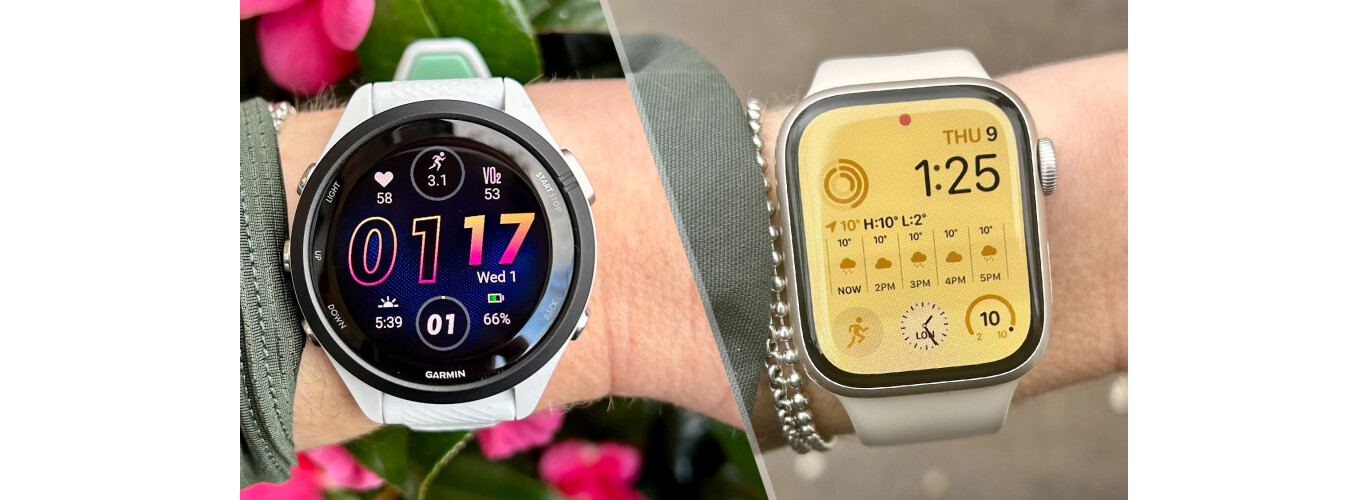
When it comes to smartwatches, especially for sports and training, Garmin is often the preferred choice among fitness enthusiasts and professional athletes. But competition in the smartwatch market is fierce, and many other manufacturers such as Apple, Samsung and Fitbit also offer attractive options. In this blog post we compare Garmin smartwatches with competing brands to help you decide which device may be best for your training needs.

Feature comparison
Garmin is known for its training-focused features. Its watches often offer accurate GPS tracking, wrist-based heart rate monitoring, and detailed analysis of your training load, recovery and even VO2 max. In addition, many models have a multisport mode, making them an ideal choice for triathletes and multi-sport athletes.
By contrast, brands like Apple and Samsung focus more on the overall user experience, seamlessly combining training features with everyday smart features such as e-mails, messages and apps.
Fitbit, on the other hand, offers features aimed more at everyday users and beginner fitness enthusiasts. These watches often come with motivating features such as step counting, activity reminders and sleep tracking.
Battery life
One of the main advantages of Garmin smartwatches is battery life. Some models last from a couple of weeks to several months without charging, which is significantly longer than most competitors. Apple Watch and Samsung devices usually need charging at the end of every day, depending on how intensively they are used. Fitbit also offers relatively good battery life, but it usually still falls short of Garmin.
Training modes and data accuracy
Garmin is known for its highly accurate training data. This is critical for professional athletes and those who want to analyse their training precisely. In addition, Garmin watches often have a wide range of training modes for different sports, from running and cycling to golf and skiing.
Although Apple and Samsung also offer many training modes, their data accuracy can sometimes fall short of Garmin's. Fitbit devices are better suited to general activity tracking and may be less detail-oriented than Garmin watches.

User experience and ecosystem
One important aspect to consider is how well a smartwatch integrates into your existing tech world. Apple Watch works seamlessly with other Apple devices, offering features like Handoff, where activities started on one device can be continued on another. Samsung watches are naturally most compatible with other Samsung devices and offer the best user experience within the Android ecosystem.
Garmin, by contrast, focuses on its own independent platform, Connect, which is compatible with both Android and Apple smartphones and offers in-depth analysis and sharing options for your sporting achievements. Fitbit has also built its own ecosystem, but is now part of the larger Google family, which may bring greater integration with Android devices in the future.
Price and value
In terms of price, Garmin watches can be an investment, especially the higher-end models aimed at specific sports. Apple Watch and Samsung models are also quite expensive, especially if you choose the premium versions. Fitbit often offers a more affordable price point, but this is also reflected in its features and data accuracy.

Conclusion
Choosing the best smartwatch depends largely on your individual needs and preferences. If your priority is accurate training data and long battery life, Garmin may be the right choice for you. If you want an excellent user experience and deep integration with your other devices, Apple or Samsung may be a better option. For beginner fitness enthusiasts, Fitbit can offer a simpler introduction to a more active lifestyle. Ultimately, it's important to choose a watch that not only meets your training needs but also fits your everyday life and the way you use technology.