
Heart rate monitors for every workout

Updated 04.04.2026
 Reading time: 5 minutes
We can all agree that an active lifestyle, sport and different kinds of training are good for us. Exercise strengthens our health, calms the mind, brightens the soul and helps us achieve more in life – whether through goals we set ourselves at competitions, on a forest trail near home or in the pool. Right now we are all focused on training remotely, but this is a great opportunity to set new goals for the future and work towards them now. A heart rate monitor is an indispensable tool for training and reaching your goals, and in Garmin's range you will find a heart rate monitor for every sport.
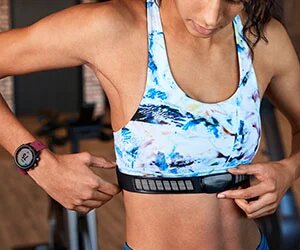 What is a heart rate monitor?
A heart rate monitor is a personal heart rate tracking device worn around the chest. It is compatible with sports watches and bike computers. Using a heart rate monitor regularly during training lets you collect important data about your health and fitness. Before buying one, it is important to figure out what information matters most to you during your workouts.
Why use a heart rate monitor?
- Determines your fitness level
- Helps you train at the right intensity
- Reduces the risk of overtraining
- Helps prevent injuries
- Detects signs of fatigue
- Monitors data in real time
As I do cross-country skiing, it's pretty much unthinkable in winter to track my heart rate from the wrist. That's why a heart rate monitor is the best way to display the data I need on my watch. A chest strap also shows the correct heart rate many times more accurately. With wrist-based readings, I've often noticed the heart rate being lower or, on the contrary, higher than it really is. In addition, using a heart rate monitor adds several analysis options, such as skiing power, which lets me compare different race laps by watts. As a downside, I'd point out that the strap sometimes tends to slip down, so it could have a better „grip“ on the body
Raido Ränkel

 Pros and cons of a heart rate monitor
+ Accurate heart rate measurement close to the heart
+ Durable
+ Compatible with a watch or bike computer
- Wearing it may feel uncomfortable or unfamiliar
- Must be positioned correctly
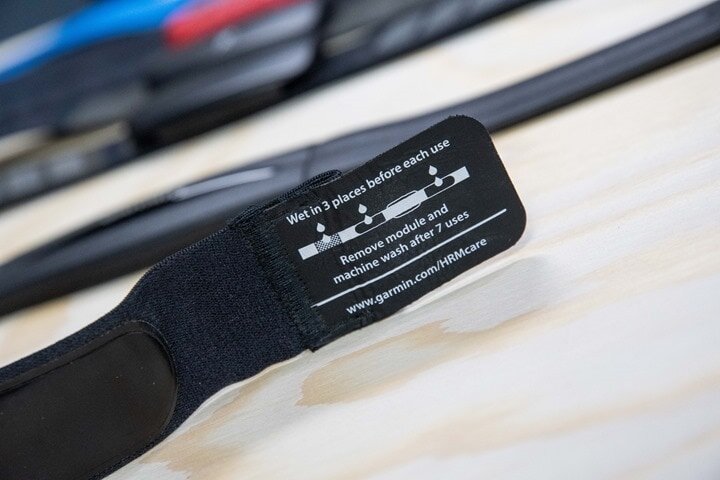
- Needs care after every use
What to consider when choosing a heart rate monitor?
- Features – for example battery life, range, water resistance and extra functions.
- Sports – whether you run and swim or only cycle. Some heart rate monitor models are suitable for multiple sports, such as triathlon. Others focus more on running analysis or, for example, only on swimming.
- Use and care – to keep your heart rate monitor performing at its best, rinse it under running water after every use. After every seventh use, wash it with soap.
- Watch compatibility – make sure the heart rate monitor you buy is compatible with the right training device and software.
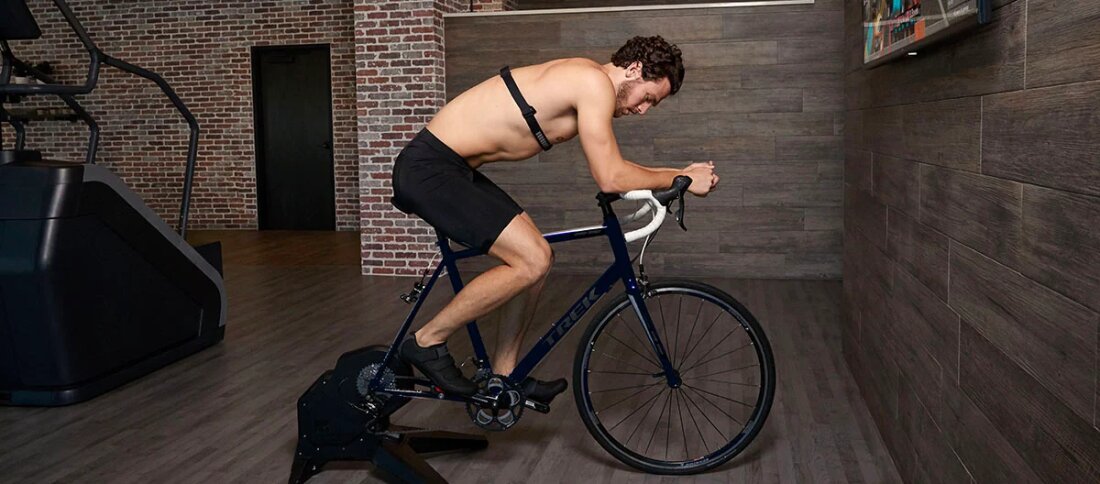
I've used a heart rate monitor for as long as I've used a sports watch – so a very long time. Depending on the specifics of my sport, it's often hard for me to use wrist-based heart rate, because in winter I wear so many layers of clothing, so a heart rate monitor is a must. I like that besides heart rate, the strap lets me see and analyse other metrics too. The Garmin heart rate monitor has been very precise and shown reliable readings, which is very important to me. It's comfortable, doesn't chafe or slip down. You need to find the way of wearing it that suits you – I, for example, wear it under my sports bra. I prefer a heart rate monitor precisely for its reliability, and I can be sure I get proper feedback from my training.
Regina Oja
Garmin Eesti offers three heart rate monitors
HRM200
A universal heart rate monitor compatible with all Garmin sports watches and bike computers. Water-resistant, but does not transmit data in water. Comfortable soft strap. Sports: gym, running, cycling. Not suitable for swimming.
HRM-FIT
Designed specifically for women, the HRM-Fit is a comfortable heart rate monitor that clips onto your sports bra to capture the key metrics you need. In addition to heart rate, it analyses running dynamics – such as cadence and vertical oscillation. The „SKI POWER“ feature can also be added. Sports: gym, running, cycling. Not suitable for swimming.
HRM600
Offers more training options than the HRM200 and is also suitable for swimming. The HRM600 can also be paired with, for example, compatible gym equipment and online training apps. In addition to heart rate, it analyses running dynamics – such as cadence and vertical oscillation. The „SKI POWER“ feature can also be added. Sports: gym, running, cycling, swimming, cross-country skiing